Executive Summary: The “Nickel-to-Cell” Era
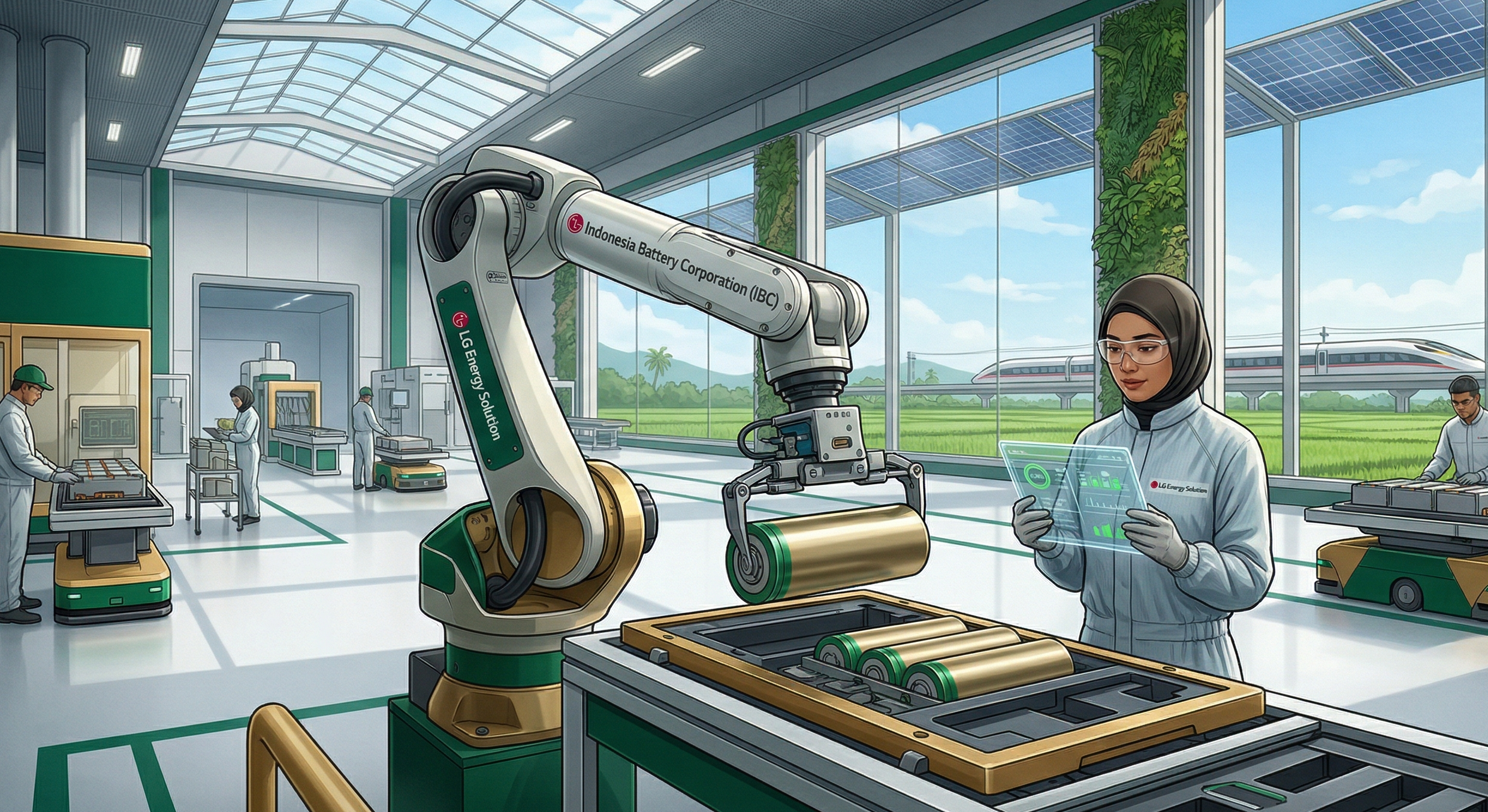
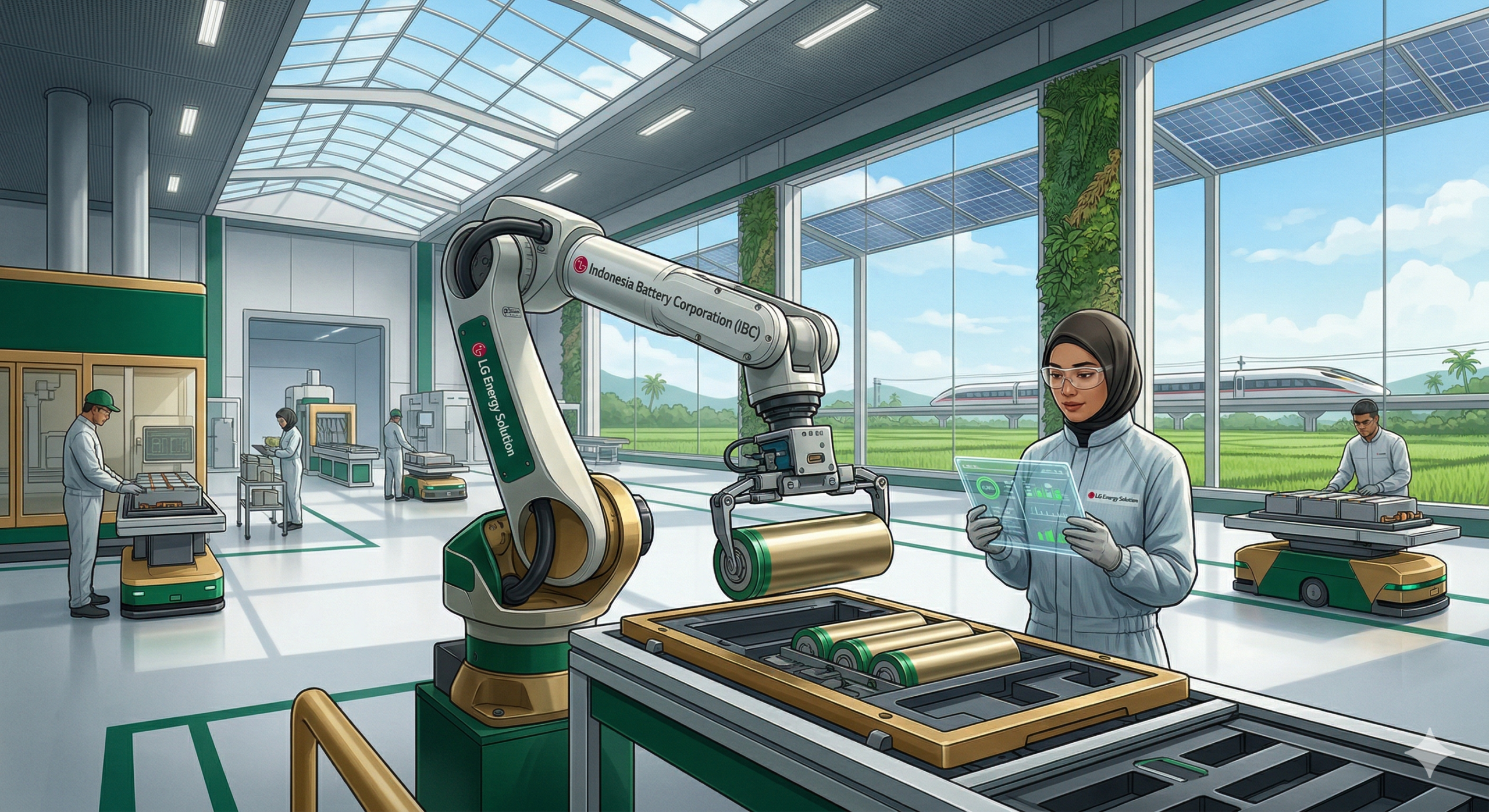
As of 2026, Indonesia has successfully transitioned from a raw material exporter to a central hub in the global Electric Vehicle (EV) Battery supply chain. Leveraging 25% of the world’s nickel reserves, the nation has integrated its downstream mining operations with high-tech gigafactories. This report analyzes the 2026 landscape where Indonesia now accounts for a projected 12% of the global EV battery production capacity. With massive investments from LG Energy Solution, CATL, and Hyundai, the “Indonesia Battery Corporation (IBC)” has become a formidable player in the ASEAN and global markets.
1. Introduction: From Ore to Energy
The year 2026 marks a historic milestone for Indonesia’s industrialization. The vision of “Indonesia Emas 2045” has found its catalyst in the automotive EV battery industry. By banning raw nickel exports in 2020, the government forced a global pivot toward domestic processing. Today, that gamble has paid off. Indonesia is no longer just a source of “Dirty Nickel”; it is a producer of High-Pressure Acid Leaching (HPAL) refined Mixed Hydroxide Precipitate (MHP) and high-quality battery cells.
This report explores the current market dynamics, the massive shifts in market size, the competitive landscape involving South Korean and Chinese giants, and the future outlook of Indonesia as a “Green Energy” leader in Southeast Asia.
2. Current Market Dynamics
A. Regulatory Framework: The “Carbon Tax” & Domestic Content (TKDN)
In 2026, the TKDN (Tingkat Komponen Dalam Negeri) requirement for EVs has reached 60%. This regulation has mandated that global automakers must utilize batteries “Made in Indonesia” to qualify for luxury tax exemptions (PPnBM) and VAT subsidies. Furthermore, the implementation of the 2026 National Carbon Tax has incentivized miners to adopt green-smelting technologies to remain competitive in the export market.
B. Geopolitical Neutrality
Indonesia has masterfully navigated the US-China trade rift. By securing a “Limited Free Trade Agreement” for minerals with the United States while maintaining massive investment ties with China’s CATL and Tsingshan, Indonesia serves as a “neutral factory” for the global EV market.
Table 1: Indonesia EV Battery Production Forecasts (2024-2027)
| Year | MHP Capacity (Kilo Tons) | Battery Cell Output (GWh) | Market Valuation (USD) |
|---|---|---|---|
| 2024 | 180 | 10 | $1.2 Billion |
| 2026 (Current) | 420 | 45 | $4.8 Billion |
| 2027 (Forecast) | 650 | 100+ | $9.2 Billion |
3. Market Landscape: The Industrial Nodes
The EV battery landscape in Indonesia is geographically concentrated into three massive “Strategic Industrial Clusters”:
The Upstream Node (Morowali & Weda Bay)
The heart of nickel processing. This cluster focuses on HPAL (High-Pressure Acid Leaching) technology, turning laterite nickel ore into Class 1 nickel for batteries.
The Midstream Node (Karawang & Cikarang)
The site of the HKML Smart Valley (Hyundai-LG). This node focuses on cell manufacturing and battery pack assembly, strategically located near the automotive hubs of Jakarta.
The Future Node (Batang Integrated Industrial Park)
Designed as the “Grand Batang City,” this area is designated for cathode and precursor plants to complete the 100% domestic supply chain.
4. Competitive Landscape: Global Alliances
Market Share Estimate (By Investment Value 2026)
*The consortia involve complex joint ventures with Indonesia Battery Corporation (IBC).*
- LG Energy Solution: The pioneer of the Karawang gigafactory. Their 10GWh plant was the first to start production, focusing on NCMA chemistry.
- CATL (via CBL): Focusing on the “mining-to-recycling” integration with a $6 billion investment plan.
- Indonesia Battery Corporation (IBC): The state-owned umbrella (Antam, Pertamina, PLN, Mind ID) that ensures a “Golden Share” in all major battery projects.
5. Market Insights: Challenges & Evolution
Despite the growth, the industry faces three critical evolutionary challenges in 2026:
1. Environmental, Social, and Governance (ESG): Global buyers like Tesla and Volkswagen are demanding “Clean Nickel.” Indonesia is responding by phasing out coal-fired power plants in Morowali in favor of solar and hydro.
2. Battery Chemistry Shifts: The rise of Lithium Iron Phosphate (LFP) batteries—which do not use nickel—poses a long-term risk. Indonesia is countering this by investing in its own LFP research and securing lithium supply agreements with Australia.
3. The Recycling Market: By late 2026, the first wave of early EV batteries will reach end-of-life. Indonesia is already building its first large-scale “Black Mass” recycling facility to close the loop.
6. Market Opportunities & Future Outlook (2027-2032)
The horizon for 2030 looks robust. With the National EV Roadmap targeting 2.5 million e-motorcycles and 600,000 e-cars by 2030, domestic demand will soon rival export volumes.
25%
Global Nickel
Reserves Share
$15B
Total FDI Inflow
(2020-2026)
60%
TKDN Target
for 2026 EVs
Deep-Dive: Indonesia Battery Corporation (IBC) SWOT Analysis
As the state-mandated “Golden Share” holder in nearly all major battery ventures (including the LG and CATL consortia), the Indonesia Battery Corporation (IBC) serves as the central nervous system of the national EV ecosystem. Understanding its strategic position is critical for any institutional investor.
💪 Strengths
- Upstream Monopoly: Direct access to the world’s largest nickel reserves via its parent company, MIND ID (Antam).
- Integrated Ecosystem: The only entity globally that spans mining, smelting, precursor/cathode production, cell manufacturing, and power grid integration (via PLN).
- Sovereign Guarantee: Direct backing from the Ministry of SOE, providing massive leverage in international credit markets.
⚠️ Weaknesses
- Technology Dependency: High reliance on LG and CATL for proprietary chemical formulations and IP.
- Capex Intensity: Massive initial capital requirements put significant pressure on the balance sheets of the four SOE parents.
- Bureaucratic Latency: Decision-making cycles can be slower compared to agile private-sector competitors.
🚀 Opportunities
- BESS Expansion: Transitioning into Battery Energy Storage Systems for Indonesia’s remote island microgrids.
- Carbon Credit Trading: Leveraging the “Green Smelting” transition to sell high-value carbon offsets to Western OEMs.
- Regional Export Hub: Positioning IBC as the primary battery supplier for the entire ASEAN automotive cluster (Thailand, Vietnam, Malaysia).
⚖️ Threats
- LFP Substitution: The rapid market adoption of Lithium Iron Phosphate (Nickel-free) batteries could diminish Indonesia’s premium.
- Geopolitical Sanctions: Potential ESG-related trade barriers from the EU or the US regarding “dirty nickel” smelting methods.
- Global Lithium Supply: Indonesia’s lack of domestic lithium reserves remains a critical “choke point” in the manufacturing process.
IBC Joint Venture Portfolio (2026 Status)
| Partner | Consortium Name | Core Chemistry | Key Facility |
|---|---|---|---|
| LG Energy Solution | Project Titan | NCMA (Nickel-Rich) | Karawang Gigafactory |
| CATL (CBL) | Project Dragon | NCM & LFP Hybrid | Halmahera/Weda Bay |
| Foxconn | Project MIH | Solid-State (R&D) | Batang Industrial Park |
*Analysis based on 2026 Fiscal Year disclosures and Ministry of SOE strategic roadmaps.
The 2026 EV Infrastructure Opportunity Map
For non-mining investors, the 2026 Indonesia EV story is defined by EV Charging Infrastructure (SPKLU) and Battery Swapping Stations (SPBKLU). The roadmap to 2030 requires 31,000 charging points and 67,000 swapping stations to support the 2.5 million projected e-motorcycles and 600,000 e-cars.
The map below identifies the four critical **Tier-1 Provinces** that present the highest ROI for infrastructure investment in 2026, based on the intersection of grid readiness, purchasing power, and regional government incentives.

Fig 6.1: 2026 Strategic Infrastructure Map (Conceptual). Priority 1 is indicated by darkest blue/gold nodes.
1. DKI Jakarta & Satellite Cities (BODETABEK)
PRIORITY 1A
The densest concentration of e-cars (60% national share) and highest purchasing power. Primary Opportunity: Ultra-fast public charging for e-luxury vehicles and commercial fleet depots.
2. West Java (Bandung Metro & Cikarang)
PRIORITY 1B
The primary manufacturing corridor with a rapidly growing suburban middle class. Primary Opportunity: Battery Swapping Networks for e-motorcycles in dense urban transit corridors.
3. Bali (Provincial Mandate)
PRIORITY 1C
Bali’s provincial government mandates 100% EV integration in key tourist zones. Primary Opportunity: “Bleisure” charging for high-end resort fleets and car rentals. Highest per-delegate visibility.
2026 Strategic Recommendation: “The Jakarta-Cikarang Corridor”
For maximum 18-month ROI, investors should focus on the **DKI Jakarta to Cikarang industrial corridor**. This route integrates the massive e-car demand of Jakarta’s corporate sector with the high-volume employee e-motorcycle traffic of Indonesia’s largest industrial zone (Cikarang). This corridor alone requires 4,000 charging points and 8,000 swapping points by the end of 2026.